How learning Dutch can help you feel more at home in the Netherlands
You moved to the Netherlands for a reason. A job, a new opportunity, a fresh chapter in your life. You want to succeed at work, enjoy your time here and feel that you are building a life that truly works for you.
Learning Dutch can help with that. Even if many Dutch people speak English, speaking some Dutch gives you access to everyday conversations, workplace culture and local life. You do not need perfect Dutch to feel the difference. A few words, a short conversation or the confidence to join in can already make the Netherlands feel more like home.

At Regina Coeli, we often see that learning Dutch is not only about grammar and vocabulary. It is about feeling more independent, more connected and more confident in the country where you live.
Why learn Dutch if everyone speaks English?
It is true that you can manage in the Netherlands with English in many situations. You can do your work, order a coffee, speak to colleagues and arrange practical matters without speaking much Dutch.
But managing is not the same as belonging. English helps you function. Dutch helps you connect.
Dutch is often the language of informal life. It appears during lunch, in quick remarks between colleagues, in jokes, at your child’s school, at the sports club, in conversations with neighbours or when people chat while waiting for a meeting to start.
You may be able to follow the main points in English, but still miss the small moments that make you feel part of daily life. Learning Dutch helps you take part in those moments.
You are not alone
The Dutch language is not easy. Especially when you are busy working, adjusting to a new culture and building a new life.
Many internationals in the Netherlands experience the same challenges. You start a conversation in English, but notice that people quickly switch back to Dutch when the conversation becomes informal. You want to participate at lunch or in meetings, but you are afraid of making mistakes. You understand more than you can say, which can feel frustrating. Or you have tried learning Dutch before, but the lessons did not give you the confidence to actually speak.
That frustration is real. And no, it is not because you are not smart enough or motivated enough. You just need the right approach, enough practice and a safe environment in which you can make mistakes.
Dutch helps you feel more included at work
In many international organisations in the Netherlands, English is the official working language. Still, Dutch often plays a role in the background.
Colleagues may switch to Dutch for short comments, informal conversations or quick practical arrangements. Internal messages, signs, jokes or small talk may also be in Dutch. When you understand more of what is happening around you, you feel less dependent on others and more part of the team.
Speaking Dutch at work does not mean you have to run a full meeting in Dutch immediately. It can start much smaller. Greeting colleagues in Dutch, asking a simple question or joining a short conversation during a coffee break can already change the way you experience your working day.
Everyday life becomes easier when you speak Dutch
Dutch also helps outside work. You may want to speak to your neighbours, understand a message from school, make an appointment, ask a question in a shop or follow what is being said at the GP, municipality or sports club.
Of course, people may switch to English when they hear you are not a native speaker. Often, they do that to be helpful. But if you want to practise Dutch, it helps when you can continue the conversation yourself.
Even basic Dutch gives you more independence. You feel less like a visitor and more like someone who can take part in everyday life.
You do not need perfect Dutch to make a connection
Many people wait too long before they start speaking Dutch. They think they first need to know enough grammar, have a large vocabulary or pronounce every word correctly.
But connection does not require perfection. A simple sentence in Dutch often has more impact than a perfect sentence in English. It shows that you are making an effort. It invites people to meet you halfway. And it gives you the confidence to try again.
At Regina Coeli, we see this every day. The moment people dare to speak, they start to grow. Not because every sentence is perfect, but because they experience that they can communicate.
Why learning Dutch can be difficult
Dutch can be a challenging language. The word order is different from English, pronunciation takes practice and small words can change the meaning of a sentence. It also does not help that many Dutch people switch to English as soon as they hear an accent.
That makes it harder to practise in daily life. You may understand the theory, but still freeze when someone asks you a question in Dutch. Or you may know the words, but not yet have the speed or confidence to use them in a real conversation.
That is why effective Dutch language training should focus on speaking from the start. You need grammar and vocabulary, of course. But you also need active practice, personal feedback and situations that feel relevant to your life in the Netherlands.
Why Regina Coeli is different
For over 60 years, Regina Coeli — known to many as the Nuns of Vught — has helped professionals communicate in a new language with confidence.
Our roots are in a religious order, and although our institute has changed over the years, something of that original atmosphere has remained. At Regina Coeli, learning takes place in a calm, focused and respectful environment. You step away from the rush of everyday work and give your full attention to one thing: learning to communicate better.
That focus is important. Many people try to learn Dutch in between meetings, family life and busy working days. But a language asks for attention. It asks you to listen closely, speak out loud, make mistakes and try again. At Regina Coeli, we create the conditions that make that possible.
Our trainers are experts, but above all, they are human. They understand how it feels to start from scratch. They guide you step by step, correct you personally and help you build confidence. You are challenged, but never judged.
Dutch that fits your life
At Regina Coeli, you do not learn Dutch from a standard script. You learn Dutch for the situations in which you actually need it.
That could mean introducing yourself to Dutch colleagues, joining a conversation at lunch, speaking to your neighbours, making an appointment, asking a question at school or understanding short conversations around you. For someone else, it may mean preparing for meetings, presentations or professional conversations in Dutch.
Your training is built around your level, your goals and your daily reality. That makes the learning process personal, practical and effective.
Two ways to learn Dutch with us
1. Intensive Dutch training in Vught
If you want to learn quickly and focus fully, our intensive Dutch training in Vught is the best option. You spend several days at our institute, working one-on-one and in small groups with our language trainers.
The environment is calm, focused and free from everyday distractions. This helps you fully immerse yourself in Dutch and make real progress in a short time.
During the training, you receive a lot of personal attention and immediate feedback. You practise speaking, listening, pronunciation, vocabulary and grammar in a way that is directly linked to your own goals. Because the programme is intensive, you build momentum quickly.
This training is especially suitable for people who want to see results quickly, have a busy schedule but can make dedicated time to focus, or prefer personal, high-impact learning.
You can also combine intensive training in Vught with online lessons. This is a good option if you want to prepare before your stay, continue practising afterwards or keep developing your Dutch over a longer period of time. The combination of full immersion and online follow-up helps you hold on to what you have learned and apply it in daily life.
Read more about intensive individual language training Dutch >

2. Group training at the High Tech Campus in Eindhoven
If you work in or near the Brainport region, our group training at the High Tech Campus in Eindhoven is a good fit. You take two high-paced lessons per week with a small group of other internationals.
The rhythm is structured and intensive, while the group setting gives you the chance to learn with others who are in a similar situation. The tempo is challenging, but effective.
This training is especially suitable for professionals who enjoy learning with others, want a structured but intensive rhythm, and live or work near Eindhoven.
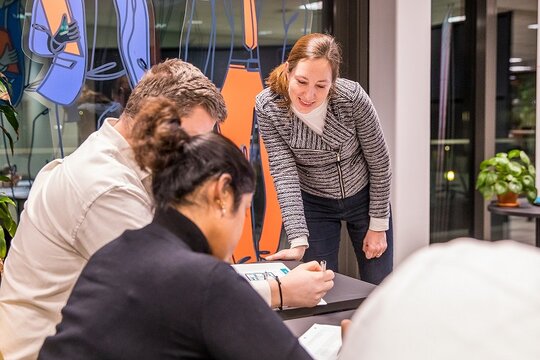
What learning Dutch can give you
When you speak Dutch, even a little, daily life becomes easier. You can greet your neighbours, chat with colleagues during coffee breaks, understand more of what happens around you and handle everyday situations with more confidence.
But the real benefit goes deeper than practical language skills. Learning Dutch helps you feel more in control of your life in the Netherlands. It helps you connect with people, understand the culture and feel that you are not just living here, but becoming part of life here.
Let us help you take the next step
Learning Dutch is not about being perfect. It is about connection, progress and feeling more at home in the Netherlands.
At Regina Coeli, we help you learn in a way that fits you. With structure, sincere dedication and personal attention. Whether you choose full immersion in Vught, online lessons, a combination of both or the energetic group setting in Eindhoven, we help you build the confidence to use Dutch in real life.
Curious to know more? Reach out to us for personal advice or sign up for a Dutch training that fits your goals.
Read more about our Dutch courses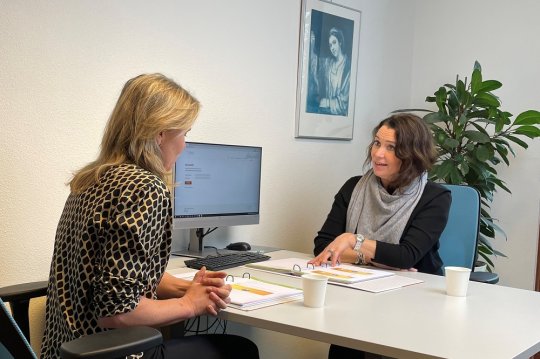
More about Dutch language and culture

A flying start in Dutch at Regina Coeli
Learning a new language takes time. It can sometimes take years before you have a good command of a foreign language. But there are ways to speed up the process—not by using Duolingo or taking group lessons, but by taking an intensive individual course at Regina Coeli, also known as ‘the Nuns of Vught’. Even with zero knowledge of Dutch, you can reach ‘A2’ level in just two weeks.
How to choose the right moment to start learning Dutch after moving to the Netherlands
When you’ve just arrived in the Netherlands, you face an important decision: are you going to learn Dutch? And when will you do that: right away or after you settle in a bit?
Speaking Dutch helps you understand the Dutch
Finn Niina Pussinen made the radical switch to using Dutch for her job. “At first, speaking Dutch felt like running a 100m dash on one leg and with two hands tied behind my back."