Getting to grips with “de” and “het” in Dutch

If you grew up speaking Dutch, you naturally learn when to use the definite article “de” or “het”. But it's very different if you learn the language later in life. Even if you've been speaking Dutch for years, it can still be difficult. And that's completely normal...
In many other languages, there is only one definite article. Take English, for example: you always say “the”.
In Dutch, there are two definite articles: de and het. The article you use depends on the gender (masculine, feminine or neuter) and whether the word is singular or plural. That sounds straightforward, but in practice it is often difficult and and even more complicated than in languages like French or German.
De-words: the most common group
Most Dutch nouns take de as their article. These are:
Masculine and feminine words (also known as common gender):
de man, de vrouw, de tafel, de stoel
All plurals, regardless of the article in the singular:
de huizen, de kinderen, de boeken
People and professions:
de docent, de student, de collega
Words ending in -ing, -heid, -nis, -tie, -teit, -schap:
de opleiding, de gezondheid, de situatie, de wetenschap
Het-words: a smaller group
There are also words that take het as their article. Examples include:
Neuter words:
het kind, het huis, het boek
Diminutive words (ending in -je):
het meisje, het stoeltje, het hondje
Words that begin with an indefinite part or with “ge-”:
het gebouw, het gevoel, het gesprek
And then there are the doubtful cases...
Sometimes no rule helps and you just have to learn the article by heart. Why do we say de appel (the apple), but het ei (the egg)? Or de boom (the tree), but het water (the water)? Well... welcome to the wonderful world of Dutch.
Tip: if in doubt, use de. You will be right in 75% of cases.
Want to learn Dutch really well? Come to Regina Coeli
The best way to get a grip on the use of “de” and “het” is to speak regularly with experienced language trainers. At Regina Coeli, better known as the Nuns of Vught, you will learn to speak Dutch correctly and naturally in a short period of time.
Take a look at our Dutch training courses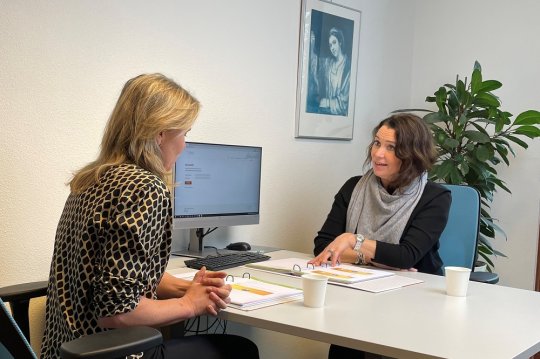
More about Dutch language and culture
What a cheese sandwich says about Dutch culture
It’s simple, it’s humble, and it’s everywhere in the Netherlands: the cheese sandwich. To the untrained eye (and taste bud), it might not seem like much. But if you're learning Dutch or curious about the culture, this modest lunch item tells you a surprising amount about the people who eat it.
How learning Dutch can help you feel more at home in the Netherlands
You moved to the Netherlands for a reason. A job, a new opportunity, a fresh chapter in your life. You want to succeed at work, enjoy your time here and feel that you are building a life that truly works for you. Learning Dutch can help with that. A few words, a short conversation or the confidence to join in can already make the Netherlands feel more like home.
A flying start in Dutch at Regina Coeli
Learning a new language takes time. It can sometimes take years before you have a good command of a foreign language. But there are ways to speed up the process—not by using Duolingo or taking group lessons, but by taking an intensive individual course at Regina Coeli, also known as ‘the Nuns of Vught’. Even with zero knowledge of Dutch, you can reach ‘A2’ level in just two weeks.