
This training at a glance
| Who is it for? | Managers, senior leaders, directors, board members, entrepreneurs, consultants and senior professionals |
| Format | Intensive, online, hybrid, at our location in Vught or as a tailored programme for management teams |
| Level | For professionals who want to strengthen, refine or use their English more effectively |
| Topics | Meetings, presentations, negotiations, stakeholder conversations, leadership communication and informal conversations |
| Training materials | You work with examples from your own professional practice, such as presentations, meetings, conversation plans, documents and strategic topics |
| Goal | To communicate in English with greater confidence, precision, impact and ease |
English for managers
- Executive communication: speaking with authority and nuance
- International meetings and boardroom communication
- Negotiating and handling sensitive conversations
- Leadership language and change communication
- Writing with seniority and precision
- Cultural awareness in international communication
- Professional informal conversations
- Practising with situations from your own management role
- The Regina Coeli approach
- Frequently asked questions about English for managers and senior leaders
English at senior level
Many managers and senior leaders already speak English well. Even so, finding the right tone in an international situation can be difficult. You may be able to follow a meeting without difficulty but find it harder to express your point clearly and with impact. You may feel comfortable giving a presentation but sometimes miss the nuance and flexibility you need. Or you may know exactly what you want to say but struggle to find words that sound both strong and diplomatic.
At management and board level, language affects trust. How do you communicate a decision? How do you deliver bad news? How do you give direction without sounding too forceful? How do you respond to resistance? And how do you make sure your English reflects your natural authority, credibility and personality?
English training for managers and senior leaders is therefore not only about language skills. It is about leadership communication: thinking clearly, choosing your words carefully and balancing content, relationships and results. Regina Coeli’s approach aligns seamlessly with this.
Executive communication: speaking with authority and nuance
As a manager or senior leader, you do not only want to be understood in English. You also want to give direction, build trust and communicate professionally. This requires language that is clear, thoughtful and natural.
At Regina Coeli, you can practise how to:
- communicate your message clearly and concisely
- add nuance when discussing sensitive subjects
- express opinions diplomatically
- ask questions that move the conversation forward
- respond to resistance or doubt
- summarise decisions
- end a conversation with clear next steps
International meetings and boardroom communication
In international meetings, you want to participate actively, even when the discussion moves quickly or different interests are involved. You want to make your point, but you also need to listen, summarise and guide the conversation.
You can work on language for:
- opening a meeting
- explaining the agenda and objectives
- involving other participants
- interrupting professionally
- discussing differences of opinion
- formulating decisions
- summarising the discussion
- making follow-up actions clear
Negotiating and handling sensitive conversations
Some conversations require extra care. These may include negotiations, performance discussions, conflicts, partnership issues, expectations, risks or bad news. In these situations, tone can make a major difference.
You can practise how to:
- explain interests and concerns
- state your position clearly
- propose alternatives
- respond to objections professionally
- show understanding without weakening your message
- set boundaries
- discuss conditions and compromises
- record agreements carefully
Leadership language and change communication
Leading people in an international environment requires language that gives direction. This is especially important during periods of change. You need to explain what is happening, why it is necessary and what you expect from others.
You can work on:
- explaining vision and strategy
- communicating urgency
- building support
- acknowledging concerns
- clarifying expectations
- motivating teams
- communicating difficult decisions
- making next steps specific
Writing with seniority and precision
Written English also plays an important role in international management. You may need to write emails, memos, management updates, presentation texts, summaries, LinkedIn posts or messages for clients, partners and employees.
You can work on:
- writing more clearly and concisely
- using a professional tone
- choosing diplomatic wording
- writing strong opening and closing sentences
- structuring complex messages
- adding nuance to sensitive subjects
- using language that suits your role
- making texts sound more natural and personal
Cultural awareness in international communication
Cultural differences often affect international cooperation. A communication style that sounds clear and efficient in one culture may sound too direct in another. On the other hand, very indirect communication can create uncertainty or confusion.
You can practise how to:
- recognise different communication styles
- make your language more diplomatic or more direct
- check that everyone has understood the message
- create space for different points of view
- prevent misunderstandings
- adjust your tone to the cultural context
- switch naturally between formal and informal English
This helps you communicate more effectively with international colleagues and stakeholders.
Professional informal conversations
Business relationships are not only built in meetings. Informal conversations before, during and after an appointment are often just as important. These conversations may take place during a dinner, conference, company visit, networking event or short introduction before a meeting.
You can practise talking about subjects such as current affairs, culture and travel, professional and personal interests. When informal conversations feel easier, formal communication often becomes more natural as well.
Practising with your own management experience
Because the training is personal, you can work with situations and materials from your own professional practice. This means you do not practise with general examples. You use language that relates directly to your role, organisation and international contacts.
You could practise a presentation you will soon deliver, an international meeting you need to chair or a sensitive conversation in which every word matters. You can also bring existing documents. Your language trainers help you make them clearer, more natural and more persuasive.
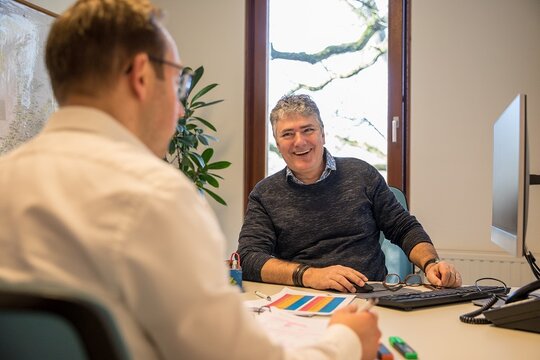
The Regina Coeli approach
At Regina Coeli, language learning is based on personal attention, complete focus and goal-based support. You do not follow a fixed programme. You work on the communication skills you need to perform more effectively in your international role.
We therefore begin by looking closely at your situation:
- What is your role?
- Who do you communicate with in English?
- What kinds of conversations do you have?
- Which meetings and presentations are important?
- What documents do you write?
- Which situations do you find difficult?
- Do you want to sound more natural, precise, persuasive, diplomatic or confident?
- Do you need English for formal situations, informal conversations or both?
Based on your answers, we define your personal learning goals.
You may work on presentations, board meetings, stakeholder conversations, negotiations or change communication. You can also focus on pronunciation, speaking more spontaneously, small talk, cultural awareness or finding the right tone. In this way, you do not learn English as a separate skill. You develop it as part of your professional effectiveness.

Request a free consultation
Would you like to know what a tailored English training programme could look like for you, your management role or your leadership team?
Explore the options at Regina Coeli or contact us for personal advice.
Request a consultation
Frequently asked questions about English for managers and senior leaders
Does Regina Coeli offer a standard English course for managers?
No. Regina Coeli provides tailored English training. We can help you with English for management, leadership, board-level communication and international cooperation. The content is based on your role, current level, learning goals and daily professional practice.
Who is this training for?
The training is designed for managers, senior leaders, directors, board members, entrepreneurs, consultants and senior professionals who use English in international situations.
Is the training suitable if I already speak English well?
Yes. Many managers and senior leaders come to Regina Coeli because they want to refine their English. For example, they may want to communicate more naturally, precisely, diplomatically or persuasively.
What is the difference between this training and a general Business English course?
A general Business English course often uses fixed topics, standard situations and a standard programme. At Regina Coeli, your personal learning goals come first. You work on the conversations, documents, presentations and language that matter in your own management role.
Can this training also be arranged for a management team?
Yes. A tailored team programme can be a good option when several managers or senior leaders want to work on similar communication goals. The programme can include shared professional situations as well as individual learning objectives.
Can I use my own presentations and documents during the training?
Yes. You can bring presentations, emails, meeting notes, strategy documents and other materials from your own work. This makes the training practical and directly relevant to your professional situation.
Can the training focus on boardroom communication?
Yes. The programme can focus on board meetings, strategic discussions, stakeholder communication, decision-making and other forms of senior-level communication. The exact content depends on your role and goals.
Is the training available online?
Yes. Training can take place online, in person in Vught, in a hybrid format or as an intensive programme. The best format depends on your goals, availability and preferred way of learning.