A full moon, a goddess and a mooncake with egg yolk

You’ve probably heard of Chinese New Year. Maybe even the dragon boat races. But the Mid-Autumn Festival? Probably not. Yet it’s one of the most important traditional celebrations in China. A festival full of symbolism, family ties, moon worship – and even poetry. It also has a beautiful link to the Chinese language.
The Mid-Autumn Festival is celebrated each year when the moon is at its fullest – on the 15th day of the 8th month in the Chinese lunar calendar. That usually falls in September or October in the Western calendar. It’s a moment of peace, connection and cultural richness. In this blog, we’ll explore the meaning behind the festival and the Chinese words that go with it.
The magic of the full moon
The Mid-Autumn Festival – Zhongqiujie (中秋节) – takes place when the moon is at its roundest and brightest. The round shape of the moon symbolises unity, harmony and togetherness.
That’s why you’ll often hear it called Tuanyuanjie (团圆节), which means “Festival of Reunion”. The idea of roundness and completeness runs deep in the Chinese language:
- yuan = round / complete / reunited
- tuan = to gather / come together
- jie = festival
The message is simple and touching: when the moon is whole, people should be too – reunited as a family. There’s even a common saying in Chinese:
Yueliang yuan, ren tuan yuan (“When the moon is full, people are united”).
Why mooncakes are everywhere
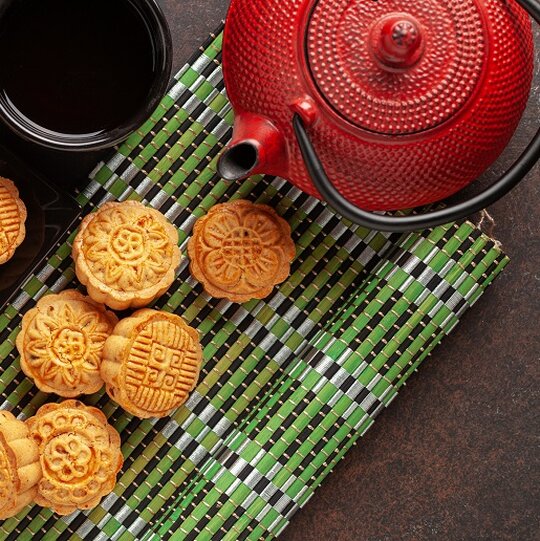
You can’t have the Mid-Autumn Festival without mooncakes. These round, often rich pastries are called yue bing (月饼):
- yue = moon
- bing = cake or pastry
Mooncakes are shared with family, friends, neighbours and colleagues, a gesture of connection. There are many regional types, such as the crispy su shi yue bing or the more traditional lao shi yue bing. Inside, there’s often a salted egg yolk, symbolising the full moon.
So mooncakes aren’t just delicious, they’re also a perfect example of how language, symbolism and tradition come together.
Lanterns, light and the power of words
In the evening, children (and adults too) carry colourful lanterns or hang them up as decorations. The word for lantern in Chinese is denglong (灯笼):
- deng = lamp / light
- long = cage / cover
These lanterns light up the night and symbolise hope, the future and connection with each other and with nature. Around this time, you’ll also find the fragrant guìhuā (桂花), or osmanthus blossom, used to make tea and wine. Not by chance, the flower stands for harmony and good fortune.
Stories under the moonlight
Like many Chinese festivals, this one comes with its own myths. The most famous is the tale of Chang’e, the moon goddess, and her husband Hou Yi, a legendary archer. He once saved the earth from ten blazing suns but later lost her to the sky, where she now lives forever on the moon.
These stories live on in poetry, plays and songs. And in poetic greetings such as:
- Zhongqiujie kuaile! – Happy Mid-Autumn Festival!
- Tuanyuan kuaile! – Happy Reunion!
- Ren yue yuan man – “People and moon are both complete.”
祝你中秋节快乐! (Zhù nǐ zhōngqiūjié kuàilè!)
Wishing you a joyful Mid-Autumn Festival!
Want to explore more Chinese?
Feeling inspired to start learning Chinese or take your skills to the next level? At Regina Coeli – known as the Nuns of Vught – you can immerse yourself in both the language and the culture. You’ll learn to speak, listen, write and understand Chinese in a way that suits your pace and your goals.
Explore the Chinese course at Regina Coeli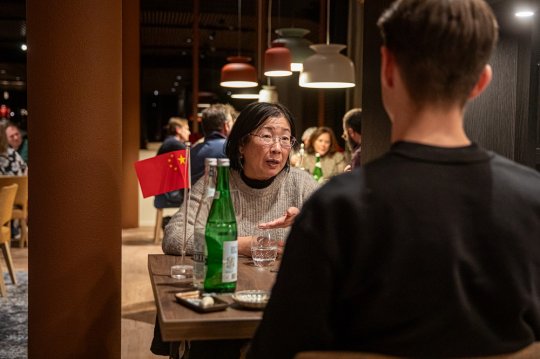
More about Chinese language and culture
What’s your name in Chinese?
Your name is often the first thing you say in a conversation. In China, though, you need to think about it for a moment. That’s because it’s common there to adapt your name. In this blog, you’ll read how that works and how to choose a Chinese name that suits you.
Learning Chinese with pinyin: easier than you think
Many people are fascinated by Chinese but feel overwhelmed by the complex characters — symbols that seem more drawn than written. The Chinese language can feel like an impossible mountain to climb. Fortunately, there’s a tool that makes it much more accessible: pinyin.
Celebrating Chinese New Year
Every year, more than one quarter of the world’s population will celebrate the Chinese New Year (new is “Xin”; year is “Nián” in Mandarin pinyin). Chinese New Year -also known as the Spring Festival- is celebrated on the second new moon after the Winter Solstice and can fall anywhere between late January and the middle of February. New Year festivities traditionally start on the first day of the month and continue until the fifteenth, when the moon is brightest.