Sinterklaas in the Netherlands: Traditions Explained

Why are Dutch children putting shoes by the fireplace? Who is the man arriving by steamboat from Spain? And why is everyone talking about pepernoten? If you're new to the Netherlands, the Sinterklaas season can be rather confusing. Here's your guide to one of the country's most beloved traditions.
Somewhere in November, something strange happens in the Netherlands. Supermarkets fill up with chocolate letters and tiny spiced biscuits. Children start singing songs about a man with a white beard. And a steamboat arriving from Spain suddenly becomes national news. Welcome to Sinterklaas.
For many Dutch families, this is one of the highlights of the year. But if you didn't grow up in the Netherlands, you may have quite a few questions. Isn't that Santa Claus? Why does he come from Spain? And what exactly is everyone celebrating?
Let's start at the beginning.
Who is Sinterklaas?
Sinterklaas, also known as Sint Nicolaas or simply de Sint, is a traditional figure based on Saint Nicholas, a Christian bishop who lived in the fourth century in what is now Turkey. Over the centuries, stories about his generosity developed into a Dutch celebration centred on children, gifts and surprises.
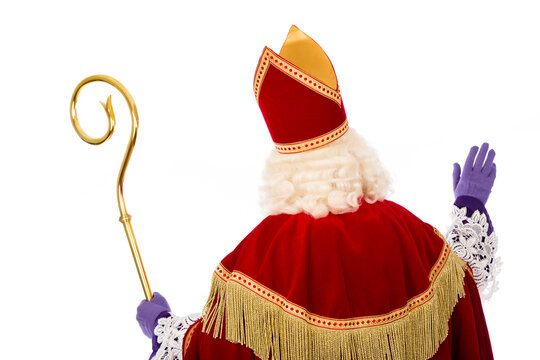
Sinterklaas is usually portrayed as an elderly man with a long white beard, a red bishop's robe, a mitre (mijter) and a golden staff (staf).
According to Dutch tradition, he lives in Spain and travels to the Netherlands every November by steamboat (stoomboot), accompanied by his helpers, known as Pieten.
And although he looks a little like Santa Claus, they are not the same person.
Het Sinterklaasjournaal: breaking news from Sinterklaas
Before the national arrival, Dutch public television starts broadcasting Het Sinterklaasjournaal, a fictional news programme about Sinterklaas and his journey to the Netherlands. The programme looks like a real news broadcast, complete with reporters, interviews and urgent updates. And every year, something seems to go wrong. Perhaps the presents have disappeared. Maybe the steamboat is having trouble. Or Sinterklaas has encountered an unexpected problem.
Will everything be ready in time?
Many primary school children follow the story closely, both at home and in the classroom. Teachers may use the episodes as a starting point for conversations and activities. For younger children, the adventures can feel very real.
So if a Dutch child tells you that Sinterklaas has lost all the presents, don't be surprised. It's probably the latest news from Het Sinterklaasjournaal.
Schoen zetten: why children leave out their shoes
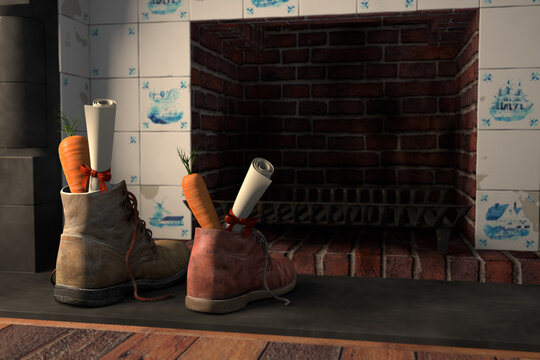
One of the most charming Sinterklaas traditions is schoen zetten, literally 'putting out your shoe'. During the weeks before 5 December, children may place a shoe near the fireplace, radiator or front door. They sometimes put a carrot or some hay inside for Sinterklaas's horse and sing a traditional Sinterklaas song before going to bed. According to the story, Sinterklaas and his helpers visit homes at night and leave something in the shoes. The next morning, children might discover a small present, a chocolate coin or some sweets.
Not every family follows the same routine. Some children put out their shoes once or twice during the season, while others do so more often. And if you're wondering how Sinterklaas gets into modern Dutch houses without a chimney, you're not the first to ask.
Pepernoten, kruidnoten and chocolate letters
You cannot experience Sinterklaas without encountering its traditional sweets. Kruidnoten are small, crunchy, spiced biscuits that appear in supermarkets well before the celebration begins. People often call them pepernoten, although technically they are different. Traditional pepernoten are softer, irregularly shaped pieces made with ingredients such as rye flour, honey and spices.
Other popular treats include:
- Chocoladeletters: large chocolate letters, often representing the first letter of someone's name.
- Speculaas: crunchy biscuits flavoured with spices such as cinnamon, cloves and nutmeg.
- Marsepein: sweet almond paste, often shaped into fruit or other figures.
- Schuimpjes: small, colourful, sugary sweets.
You will probably also hear the word strooigoed: a mixture of sweets and biscuits traditionally scattered or handed out by the Pieten.
A useful tip: if a Dutch colleague offers you pepernoten, they probably mean kruidnoten. There is no need to correct them!
Pakjesavond: the big celebration on 5 December
Although Sinterklaas arrives in November, the main celebration takes place on the evening of 5 December. This is called pakjesavond, literally 'presents evening', or het heerlijk avondje, 'the wonderful evening'.
In families with young children, presents may mysteriously appear in a large sack at the front door. Sometimes there is a loud knock, but when the children open the door, nobody is there. Only the presents remain.
Older children and adults often celebrate differently. They may exchange gifts, write humorous poems or make elaborate homemade gift packages.
Two traditions are particularly worth knowing:
Het sinterklaasgedicht - the Sinterklaas poem
A gift is often accompanied by a rhyming poem about the recipient. These poems can be affectionate, funny or gently teasing. They might refer to someone's habits, hobbies or something embarrassing that happened during the year.
De surprise - the homemade gift disguise
A surprise (pronounced approximately 'sur-PREE-zuh' in Dutch) is a creatively wrapped present, often disguised as something completely different. Someone who loves cycling might receive a cardboard bicycle with a small gift hidden inside. A coffee enthusiast could get an enormous handmade coffee cup.
In schools, families and groups of friends, people sometimes draw names (lootjes trekken) to decide who will make a surprise or write a poem for whom. The idea is not necessarily to give an expensive present. Creativity, humour and personal attention are often more important.
Who are the Pieten, and why is Zwarte Piet controversial?
You may notice that Sinterklaas is accompanied by helpers known as Pieten. Their appearance has changed considerably over the years, and this is connected to an important social debate in the Netherlands.
Traditionally, Sinterklaas's helper was known as Zwarte Piet (Black Pete). For a long time, this character was commonly portrayed by people wearing black face paint, curly black wigs, bright red lipstick and sometimes large earrings. This portrayal has become controversial because many people consider it a racist caricature of Black people.
Critics point to the character's origins in the nineteenth century, when stereotypical images of Black people were common in European society. They argue that the combination of exaggerated physical features, dark skin and the historical role of a servant to a white bishop reinforces racist stereotypes. Some Black Dutch people have also described experiencing hurtful comments or discrimination associated with the character.
Others see Zwarte Piet primarily as a familiar character from their childhood. They emphasise the festive intention behind the tradition and argue that the character is not meant to represent or insult Black people. Some also explain the dark face paint through the story that Piet becomes covered in soot while climbing through chimneys.
The discussion is therefore not only about the appearance of a festive character, but also about racism, discrimination, cultural identity and the question of how traditions should evolve.
From Zwarte Piet to roetveegpiet
In response to the debate, alternative versions of Piet have appeared. The most widely recognised is the roetveegpiet (soot-smudged Piet). Instead of having an entirely black-painted face, this character has a few dark smudges on the cheeks and forehead, representing soot from the chimney. Other racially stereotypical features are generally omitted. There have also been regenboogpieten (rainbow Pieten) and kleurenpieten (colourful Pieten), with faces painted in different bright colours, as well as Pieten without face paint.
These variations have been introduced or used at different times as organisers explored alternatives to the traditional portrayal. Not all have become equally widespread.
Today, the appearance of Piet can vary between events and communities. The national Sinterklaasjournaal uses soot-smudged Pieten, while local celebrations may have their own approach.
For internationals, it is useful to understand that this is a sensitive subject. Dutch people do not all share the same views, and the discussion can evoke strong feelings.
Is Sinterklaas the same as Santa Claus?
Not exactly, although the two figures have a historical connection. The name Santa Claus ultimately derives from Sinterklaas, brought to North America through Dutch traditions. Over time, Santa Claus developed into the figure associated with Christmas. In the Netherlands, the two celebrations are generally separate. Sinterklaas brings presents on 5 December, while Kerstmis (Christmas) is celebrated on 25 and 26 December.
Some Dutch families exchange gifts on both occasions. Others focus mainly on one of them. And while Sinterklaas is especially exciting for young children, adults also enjoy the poems, surprises and festive atmosphere.
Ten Dutch Sinterklaas words worth knowing
If you're spending November or December in the Netherlands, these words will help you understand what's going on.
| Dutch word | What it means |
| Sinterklaas / de sint | Saint Nicholas, the central figure of the celebration |
| De intocht | Sinterklaas's festive arrival in the Netherlands |
| Het Sinterklaasjournaal | A fictional news programme following Sinterklaas's adventures |
| De Pieten | Sinterklaas's helper or helpers |
| Schoen zetten | Leaving out a shoe in the hope of receiving a small gift |
| Kruidnoten | Small, crunchy, spiced biscuits |
| Pakjesavond | The evening of 5 December, when families exchange presents |
| Sinterklaasgedicht | A humorous or personal poem accompanying a gift |
| Surprise | A creatively disguised, handmade gift package |
| Lootjes trekken | Drawing names to decide who gives a gift to whom |
One more expression you might hear is ‘Wie zoet is, krijgt lekkers’, a line from a traditional Sinterklaas song. It means that those who behave well receive treats, reflecting the historical idea that Sinterklaas rewards good behaviour.
How can you join in?
You don't need to have grown up with Sinterklaas to enjoy the tradition. If you have children in a Dutch primary school, you will probably encounter Sinterklaas activities, songs and stories. Schools may organise a celebration, ask children to make a surprise or invite Sinterklaas to visit. At work, colleagues might bring in kruidnoten, exchange chocolate letters or organise a small surprise evening.
And if someone invites you to celebrate pakjesavond, ask how their family does it. Traditions vary, and knowing whether you should bring a gift, write a poem or make a surprise will save you some confusion.
Finally, remember that many young Dutch children believe Sinterklaas is real. If a child excitedly tells you about the latest developments in Het Sinterklaasjournaal, it's usually best to play along.
Sinterklaas may seem complicated at first, with its steamboats, shoes, poems, sweets and traditions. But understanding the celebration offers a fascinating glimpse into Dutch family life and culture.
And once you've written your first Sinterklaas poem or made your first surprise, you might even find yourself looking forward to the next pakjesavond.
Learn the Dutch language and culture
Learning Dutch also means discovering the traditions, customs and cultural differences that shape everyday life in the Netherlands. At Regina Coeli, our language trainers help you understand not only the language, but also the culture behind it, so you can feel more confident communicating with Dutch people.
Discover our Dutch courses