Oktoberfest: more than beer and bratwurst
When you think of Oktoberfest, you probably picture giant beer mugs, lederhosen, and lots of partying. But did you know that the world’s biggest folk festival is more than just a Bavarian celebration? Oktoberfest has royal roots and even a business edge. In this article, we take a look at the history, key terms, and networking opportunities you’ll find at the Wiesn.
From royal wedding to global event
The first Oktoberfest took place in 1810 to celebrate the marriage of Crown Prince Ludwig of Bavaria and Princess Therese of Saxony-Hildburghausen. A public festival was held on the fields now known as the Theresienwiese, named after the bride.
The event was such a success that it became an annual tradition. Over the years, it grew into the world-famous event we know today. And despite its name, Oktoberfest usually starts in September — the weather is just a bit more pleasant then.
Germans even have a name for this warm early-autumn period: Altweibersommer. Literally “old women’s summer”, the phrase refers to the fine threads of spider silk that float in the autumn air, glistening like silver hair. It’s a poetic way to mark the start of the festive season.
There’s more to Oktoberfest than beer
Of course, beer plays a major role at Oktoberfest. But there’s much more to enjoy — and learn. You’ll find:
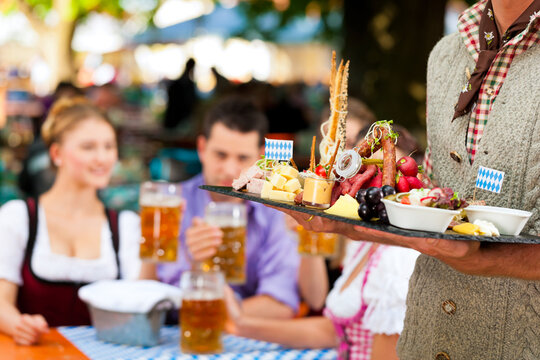
- Men in Lederhosen and women in colourful Dirndl
- Lively brass bands playing traditional music
- Long tables filled with grilled chicken, pretzels, and other Bavarian specialities
- Families and friends gathering year after year
And everything is about Gaudi — a Bavarian word for fun, joy, and good vibes. It comes from the Latin gaudium, meaning joy.
Oktoberfest lingo: what they don’t teach you in class
If you watch Oktoberfest on TV or social media, you’ll hear plenty of words you won’t find in your average German course. Here’s a cheat sheet:
| German term | Meaning in English |
| Oktoberfest | Oktoberfest |
| Theresienwiese | The festival grounds |
| Tracht | Traditional clothing |
| Lederhose | Leather trousers for men |
| Dirndl | Traditional dress for women |
| Maßkrug | One-litre beer mug |
| Anstich | Tapping of the first beer keg |
| O’zapft is! | “It’s tapped!” (official opening toast) |
| Festzelte | Festival tents |
| Hendl | Roast chicken |
| Brezel | Pretzel (shaped like folded arms in prayer) |
| Blaskapelle | Brass band |
| Gemütlichkeit | Warmth, comfort, a cosy social vibe |
| Prosit! | Cheers! |
| Bierzelt | Beer tent |
| Gaudi | Fun, joy, entertainment |
Many of these words are typical for southern Germany or have a local Bavarian flavour.
A place to network? Absolutely!
Surprisingly, Oktoberfest is also a major business networking event — especially in Munich. For decades, local companies have invited clients, colleagues, and partners to join them at one of the Wiesn tents.
There are 14 large tents and many smaller ones, each with a different feel:
- Schottenhamel-Festzelt: This is where the mayor taps the first keg. It’s relaxed and social — great for start-ups and casual business chats.
- Schützen-Festzelt: A stylish spot with traditional flair and a young crowd — popular with creative and tech companies.
- Ochsenbraterei: A more peaceful setting, ideal for deeper conversations.
- Augustiner Festzelt: Perfect for first-timers — traditional, friendly, and authentic.
- Marstall and Käfer’s Wiesnschänke: More exclusive, with high-end food and a VIP atmosphere.
- Oide Wiesn: A nostalgic area with cultural shows — excellent for introducing international guests to Bavarian tradition.
And yes. major investment firms, software companies, and events like Bits & Pretzels also use Oktoberfest to meet, pitch, and connect.
Want to learn German? Oktoberfest has lessons too
Oktoberfest shows how deeply language and culture are connected. It’s a great chance to pick up new words, understand how Germans celebrate, and experience what Gemütlichkeit truly means.
And when you hear O’zapft is!, you’ll know it’s not just a shout — it marks the official start of the festivities, led by Munich’s mayor.
Learning German with cultural context
At Regina Coeli, we believe language comes alive through culture. That means no boring word lists, but learning how Germans think, speak, and work.
Ready to improve your German with real cultural insight? Check out our German training at Regina Coeli and learn in a way that fits you.
Read more about our German courses